
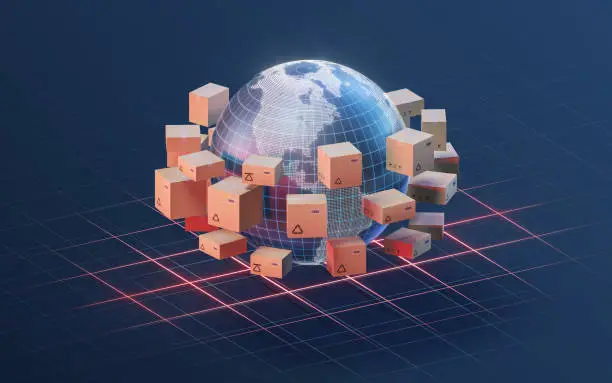
For decades, global commerce operated on a simple premise: manufacture goods wherever labor and raw materials were cheapest, ship them across oceans in massive container vessels, and distribute them from a handful of centralized megawarehouses. That model delivered low unit costs during periods of geopolitical stability and predictable fuel prices. However, recent years have exposed the fragility of hyper-centralized logistics networks. A single blocked canal, port strike, or regional weather event can stall inventory for months, leaving retailers with empty shelves and frustrated customers.
In response, operations leaders across manufacturing, e-commerce, and wholesale distribution are rethinking their physical footprints. Rather than relying on one or two sprawling distribution centers to serve an entire continent, companies are increasingly investing in smaller, strategically positioned regional fulfillment hubs. This architectural shift is not merely a defensive reaction to past disruptions; it is becoming a primary driver of customer satisfaction, margin protection, and environmental sustainability.
The Hidden Costs of Centralized Distribution
On a spreadsheet, consolidating inventory into a single national warehouse looks attractive. Overhead expenses—such as facility leases, warehouse management software, and supervisory staff—are concentrated under one roof. Bulk inbound shipments from overseas suppliers arrive at one destination, simplifying customs clearance and receiving workflows.
Yet those apparent savings often evaporate once products leave the loading dock. Shipping individual parcels or less-than-truckload pallets across multiple freight zones incurs steep transportation charges. Carriers apply dimensional weight pricing and fuel surcharges that penalize long-distance ground transit. When a customer in Boston orders a heavy household item stored in a warehouse outside Los Angeles, the shipping cost alone can wipe out the retailer’s gross margin.
Furthermore, centralized networks struggle to meet modern delivery expectations. Today’s buyers rarely distinguish between giant online marketplaces and independent brands when judging shipping speed. Two-day delivery has become the baseline assumption rather than a premium perk. Achieving two-day ground transit from a single facility is geographically impossible for most countries, forcing businesses to rely on expensive air freight to bridge the gap.
How Micro-Fulfillment and Regional Nodes Improve Agility
Decentralizing inventory solves both the speed and cost equations simultaneously. By placing high-velocity stock in four to six regional hubs located near major population centers, businesses dramatically shorten the final leg of delivery. Instead of traversing six or seven shipping zones, most orders travel within Zone 1 or Zone 2, slashing carrier fees and reducing transit times to twenty-four or forty-eight hours via standard ground service.
Regionalization also builds natural redundancy into the supply chain. If a severe winter storm shuts down highway corridors in the Midwest, orders destined for the East Coast or the South remain unaffected because their inventory resides locally. Logistics teams can dynamically reroute online orders to the nearest facility with available stock, preventing widespread backorders.
As companies build out these distributed networks, choosing the right logistics partners and industrial infrastructure becomes critical. Organizations expanding into new territories often evaluate established commercial networks and multi-sector operators like NOBARID to understand how integrated regional capabilities support smoother distribution and local market entry. Having reliable physical touchpoints on the ground reduces friction when scaling operations across unfamiliar jurisdictions.
Inventory Allocation Challenges in a Multi-Node Network
Transitioning from a single warehouse to a distributed fulfillment model introduces operational complexity that requires careful planning. The primary risk of splitting inventory across multiple locations is stock fragmentation. If a company holds 1,000 units of a popular SKU in one building, any customer anywhere can purchase it until the bin runs dry. If those 1,000 units are divided equally among five regional hubs, one location might sell out while another sits on stagnant surplus.
Overcoming stock fragmentation demands smarter demand forecasting and automated order routing. Modern distributed order management systems analyze historical purchasing patterns by zip code, seasonal trends, and promotional calendars to determine how much inventory each region actually needs. Rather than splitting stock evenly, planners allocate safety stock proportionally based on local demand velocity.
Additionally, businesses do not need to replicate their entire product catalog in every regional facility. A practical approach involves keeping slow-moving, niche, or oversized items in a central national hub while positioning the top twenty percent of best-selling SKUs—which typically account for eighty percent of order volume—in regional nodes. This hybrid strategy captures most of the shipping savings without tying up excessive working capital in duplicate safety stock.
Environmental Benefits of Shorter Last-Mile Journeys
Beyond financial metrics, regional fulfillment aligns closely with corporate sustainability goals. Transportation accounts for a substantial share of a product’s total carbon footprint, particularly when expedited air freight is used to compensate for distant warehousing. Shifting volume from air cargo to regional ground transport significantly lowers greenhouse gas emissions per package.
Shorter delivery routes also reduce packaging waste. Parcels traveling across the country pass through numerous automated sorting facilities, conveyor drops, and truck transfers, requiring heavy-duty corrugated boxes, thick void fill, and extra tape to survive the journey. Local deliveries undergo far fewer handling touches, allowing brands to use lighter, minimalist packaging materials without risking transit damage.
Preparing Your Operations for Geographic Expansion
Moving toward a regional hub model does not require building company-owned facilities from scratch. Third-party logistics providers offer flexible, multi-client warehousing spaces that allow brands to test regional demand on a pay-as-you-go basis. Before committing to new locations, logistics managers should audit at least twelve months of historical order data to map customer density by postal code.
Once high-density clusters are identified, businesses can launch a pilot program in their highest-volume region, measuring the impact on shipping expenses, delivery speed, and repeat purchase rates. In an era where operational resilience and delivery velocity define competitive advantage, bringing inventory closer to the customer is one of the highest-leverage investments a growing company can make.