
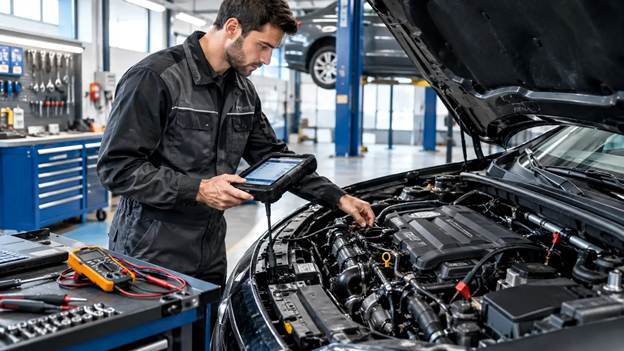
Modern vehicles are more advanced than ever before. While traditional automotive systems relied heavily on mechanical components, today’s cars combine complex mechanical assemblies with electronic control units, sensors, wiring systems, and computerized diagnostic technologies. As a result, identifying the root cause of a vehicle problem often requires more than basic mechanical knowledge.
For automotive technicians, understanding the relationship between mechanical performance and electrical systems is essential. A vehicle that struggles to start, loses engine power, consumes excessive fuel, or displays warning lights may have a mechanical fault, an electrical issue, or a combination of both.
Learning how these systems interact can help technicians diagnose problems more accurately, reduce unnecessary repairs, and improve the overall quality of automotive maintenance.
Understanding the Connection Between Mechanical and Electrical Systems
A modern vehicle operates through the interaction of numerous components. The engine, transmission, braking system, and suspension perform essential mechanical functions, while sensors, actuators, electronic control units, and wiring networks help monitor and control vehicle performance.
Consider an engine that runs unevenly at idle. A technician might initially suspect a mechanical problem involving the intake system, fuel delivery, or engine compression. However, the same symptoms can also result from a faulty sensor, damaged wiring, an ignition system malfunction, or an incorrect signal reaching the engine control unit.
Replacing parts without identifying the underlying cause can increase repair costs and waste valuable workshop time.
A systematic diagnostic approach begins with understanding the symptoms, examining the relevant components, and determining whether the fault originates in a mechanical assembly, an electrical circuit, or the interaction between the two.
Common Vehicle Problems That Require Combined Diagnostic Knowledge
1. Engine Starting Difficulties
Starting problems are among the most common complaints reported by vehicle owners. When an engine fails to start, the first step is to determine whether it cranks normally, cranks slowly, or does not crank at all.
A weak battery, corroded terminals, damaged starter wiring, or a faulty starter motor may prevent the engine from turning properly. If the engine cranks but does not start, other possible causes include insufficient fuel pressure, ignition failure, incorrect sensor readings, or mechanical problems affecting compression and timing.
Understanding both electrical circuits and engine operation allows technicians to narrow down the possibilities instead of replacing components based on assumptions.
2. Loss of Engine Power
Reduced acceleration can have several causes. Restricted airflow, fuel delivery problems, exhaust restrictions, low compression, and transmission faults can all affect performance.
At the same time, a malfunctioning throttle position sensor, mass airflow sensor, or another electronic component may cause the engine control unit to limit power or calculate an inappropriate fuel mixture.
Diagnostic trouble codes can provide useful clues, but a stored code does not automatically mean that the named component has failed. Technicians must evaluate live data, inspect wiring where appropriate, and perform mechanical tests when the symptoms indicate a possible internal engine problem.
3. Unusual Engine Sounds
Knocking, ticking, grinding, and rattling noises can indicate different types of mechanical faults. Worn bearings, lubrication problems, loose components, and timing system issues are examples of potential causes.
However, some noises may be associated with electrical components, such as a failing cooling fan motor or an actuator that is not operating correctly.
Accurately identifying the source of a noise requires listening carefully, reproducing the operating conditions, and checking the relevant systems. Guesswork can lead to unnecessary repairs or allow a serious mechanical problem to become worse.
4. Warning Lights and Electronic Faults
Modern vehicles use sensors to monitor engine operation, emissions, temperature, wheel speed, and many other parameters. When the control system detects an abnormal condition, it may store a diagnostic trouble code and illuminate a warning light.
A warning light should be treated as a starting point for investigation rather than a complete diagnosis. For example, a fault code associated with an oxygen sensor could be related to the sensor itself, its wiring, an exhaust leak, or another condition affecting the measured air-fuel mixture.
Technicians need to understand how electronic signals relate to real mechanical conditions. This knowledge helps them interpret diagnostic information and verify the actual cause before recommending a repair.
Why Electrical Diagnostic Skills Are Essential for Automotive Technicians
Electrical systems play a central role in modern automotive technology. Even components that perform mechanical functions may depend on electronic signals to operate correctly.
Technicians should understand basic electrical principles, including voltage, current, resistance, continuity, grounding, and circuit protection. They should also know how to use a digital multimeter safely, interpret wiring diagrams, and identify problems such as voltage drops, poor connections, and short circuits.
Diagnostic scanners are valuable tools, but they cannot replace technical understanding. A scanner may reveal an error code or display unusual sensor data, yet additional measurements and inspections are often necessary to establish the cause.
For people who want to develop these practical abilities, structured training can provide a foundation in circuit analysis, automotive electrical components, and systematic troubleshooting. A specialized automotive electrical training course can help learners build the knowledge needed to understand electrical faults and approach diagnostic tasks more methodically.
The Importance of Strong Mechanical Knowledge
Although electronic diagnostics are increasingly important, mechanical expertise remains fundamental to automotive repair.
Technicians must understand how engines produce power, how lubrication and cooling systems operate, how transmissions transfer torque, and how wear affects the performance of moving components. They should also be able to recognize symptoms associated with poor compression, fluid leaks, excessive vibration, and abnormal mechanical resistance.
For example, an engine misfire may be caused by an ignition fault, but it can also result from a damaged valve, a compression problem, or an issue with engine timing. Replacing ignition components without checking the available evidence may not resolve the problem.
Mechanical inspection and testing help technicians confirm whether the engine’s physical condition matches the expected operating specifications.
People entering the automotive repair profession can benefit from practical instruction covering engine components, transmission systems, vehicle maintenance, and troubleshooting procedures. A structured automotive mechanics training course can help learners develop a stronger understanding of the mechanical systems they will encounter in real repair environments.
A Practical Diagnostic Process for Modern Vehicles
A consistent diagnostic procedure makes automotive troubleshooting more efficient and reliable. Although the exact process depends on the vehicle and the reported symptoms, technicians can follow several general steps.
Step 1: Confirm the Customer’s Complaint
Begin by asking when the problem occurs, whether it happens continuously or intermittently, and whether any warning lights or unusual noises appear. Reproducing the reported symptoms can help prevent incorrect assumptions.
Step 2: Perform a Visual Inspection
Check for loose connectors, damaged wiring, fluid leaks, worn belts, disconnected hoses, corrosion, and other visible abnormalities. Simple inspection can reveal issues before more complex testing becomes necessary.
Step 3: Scan the Relevant Electronic Systems
Use a compatible diagnostic scanner to retrieve trouble codes and review available live data. Record the findings and consider the conditions under which the fault occurs rather than immediately replacing the component associated with a code.
Step 4: Carry Out Targeted Electrical Tests
Depending on the symptoms, test battery condition, charging performance, voltage supply, grounds, circuit continuity, or sensor signals. Follow the vehicle manufacturer’s procedures and avoid probing circuits in ways that could damage sensitive electronic components.
Step 5: Perform Mechanical Tests When Needed
If the evidence suggests a mechanical fault, use appropriate procedures to assess compression, fluid pressure, timing, or component condition. Electrical readings and scanner data should be interpreted alongside physical inspection results.
Step 6: Verify the Repair
After correcting the identified fault, repeat the relevant tests and confirm that the original symptoms have disappeared. Clear diagnostic codes only when appropriate, and perform a road test if it is safe and necessary.
This process reduces unnecessary part replacement and helps ensure that the repair addresses the actual cause rather than only its visible symptoms.
How Automotive Training Helps Build Practical Expertise
Automotive technology continues to evolve, creating a need for technicians who can combine theoretical knowledge with practical diagnostic skills.
Effective training should help learners understand the purpose of individual components, recognize common failure patterns, use workshop equipment correctly, and follow a logical troubleshooting process. Hands-on practice is especially valuable because real vehicle faults do not always match textbook examples.
Beginners can start by learning the fundamentals of engines, electrical circuits, and vehicle maintenance. With experience, they can develop more advanced skills in electronic diagnostics, engine management systems, and fault analysis.
Experienced mechanics can also benefit from updating their knowledge as vehicle designs and diagnostic technologies change. Understanding both mechanical and electrical systems allows them to approach a wider range of repair problems with greater confidence.
Conclusion
Modern automotive diagnostics requires a balanced understanding of mechanical engineering principles and automotive electrical systems. Starting difficulties, engine performance problems, warning lights, and unusual noises can have multiple causes, making systematic testing more valuable than guessing or replacing parts unnecessarily.
Technicians who combine mechanical inspection with electrical measurements and electronic diagnostic tools are better equipped to identify faults accurately and verify successful repairs.
For aspiring automotive professionals, developing both skill sets provides a practical foundation for working with today’s increasingly sophisticated vehicles. Continuous learning, hands-on experience, and a structured approach to troubleshooting remain essential for delivering reliable automotive repair services.